
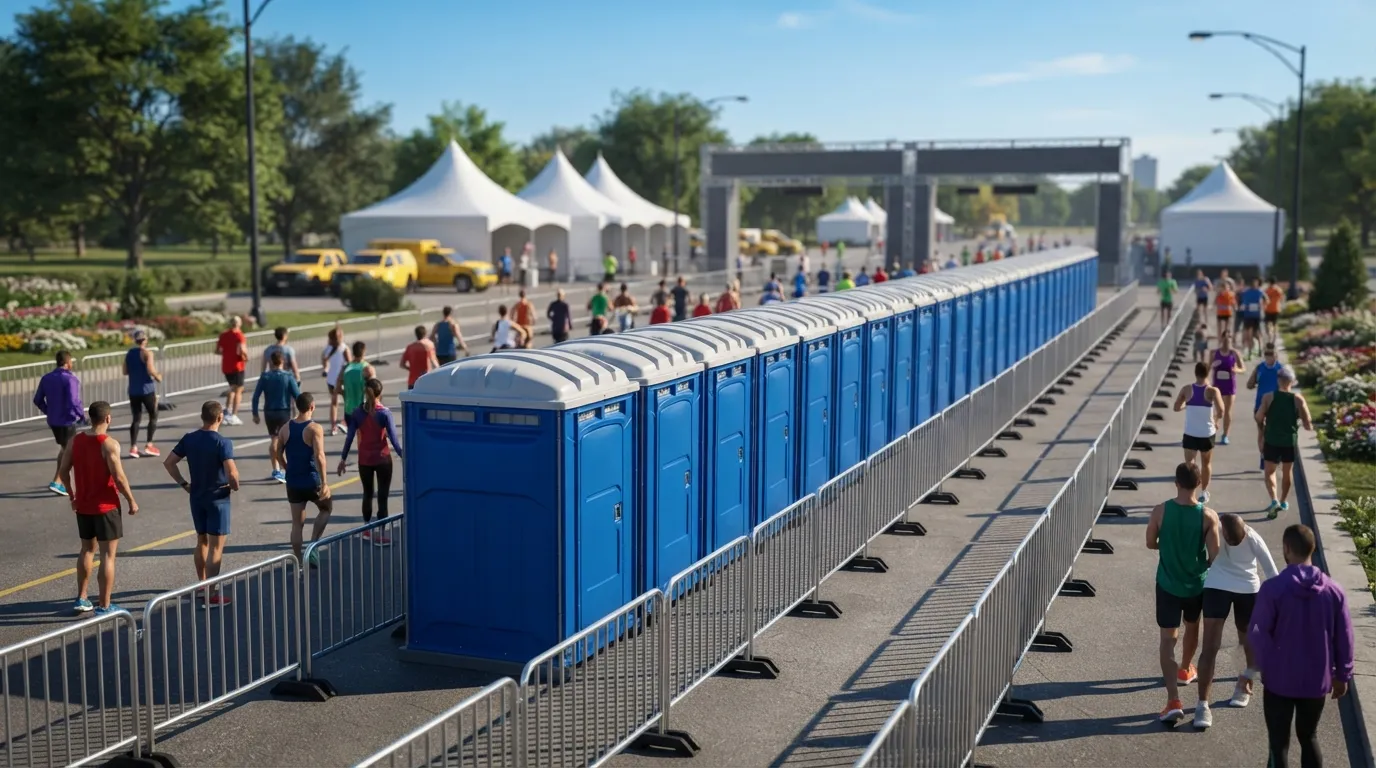
How many restrooms does a race route need?
Start with runner count, then think about the shape of the course, not just the number. A point-to-point marathon through Fullerton needs restrooms clustered at the start corral, spaced along aid stations, and stacked heavy at the finish festival where runners linger. How many porta potties do I need walks through the ratio math in more depth, but the short version: races cluster demand at three points, not evenly across the whole route like a construction site does. A standard unit rents in the 200 to 400 dollar event band, and most timed races book several days ahead of the gun to allow for temporary fence rental and staging.
Aid stations every couple of miles usually get one or two standard porta potty rental units, not a bank of ten. The finish line area is different. That's where runners bottleneck after crossing, family members wait, and a limp water station becomes a real line. Budget more units there than anywhere else on the course. If the race includes a wheelchair or adaptive division, ADA accessible porta potty units matter at both start and finish, and ADA Standards section 213.2 sets a floor of at least one accessible unit in any cluster, five percent minimum once the cluster grows. A 60 inch turning circle, ADA Standards section 304.3.1, is what a wheelchair racer actually needs at the unit door, not just a ramp.
For a bigger production with a beer garden or VIP tent, a deluxe flushable porta potty upgrade reads better in photos than a standard unit lined up in a row.
What about power for timing equipment and lights?
Races that run before sunrise or finish after dark need lighting at the start corral and the finish chute, and timing mats need clean power that will not brown out mid-race. A light tower rental handles the corral lighting, and a temporary power pole feeds timing tents, PA systems and vendor booths without every generator on site fighting for the same circuit. OSHA 1926.404(b)(1)(ii) governs ground fault protection on temporary power, which matters when timing equipment and wet grass share the same footprint.
Knowing how to brace a temporary power pole matters more than people expect. A power pole set into soft turf near a finish line, hit by a water table refill cart or a race-day crowd surge, is a hazard nobody wants at mile 26. Guy the pole at two points minimum, keep the base plate on solid ground rather than loose mulch, and route cable away from the runner path entirely rather than taping it down across the chute. If the course crosses a road, treat cable crossings the way a construction site would, with a real crossing ramp, not just tape.
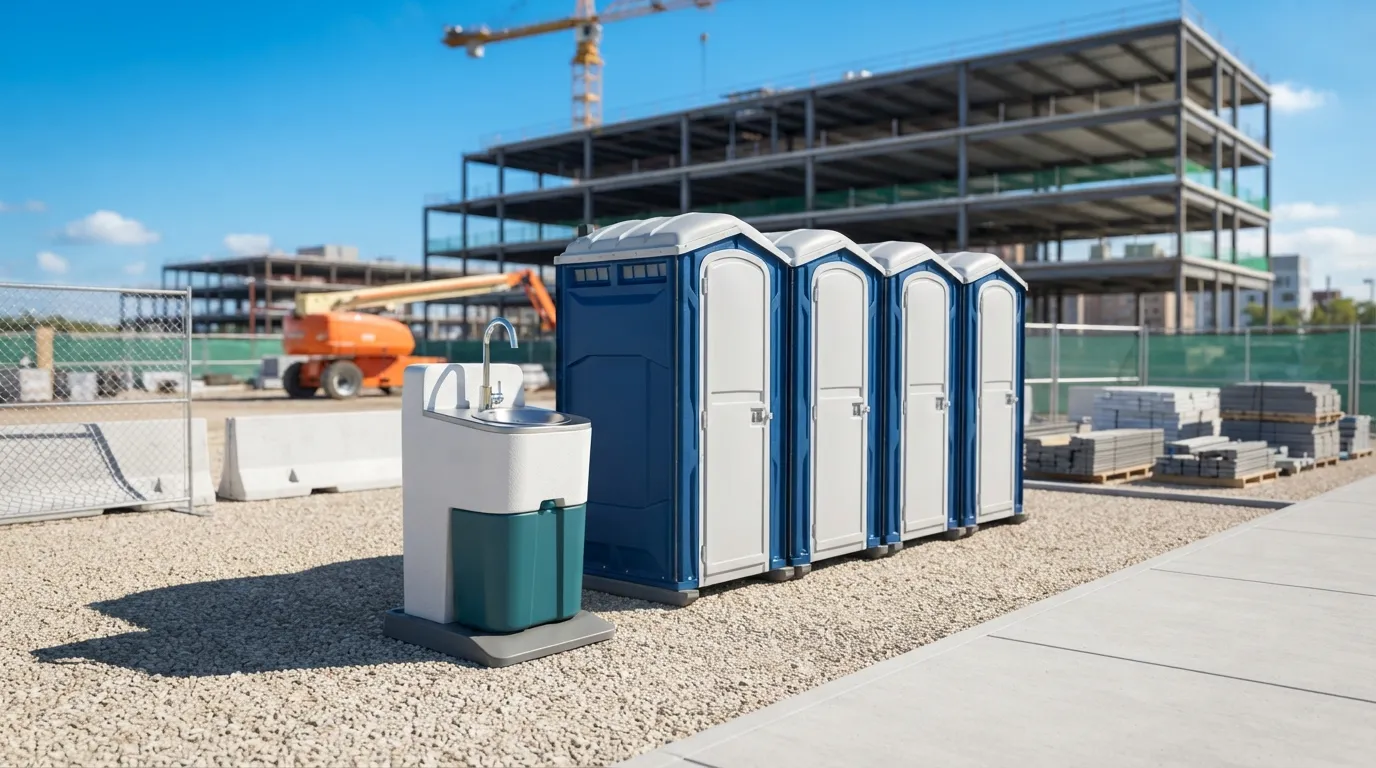
Handwashing near food vendors and the finish festival isn't optional if food trucks are on site. A handwashing station rental with soap and towels satisfies 29 CFR 1910.141(d)(2), which specifically requires soap and towels or a hand-drying device, not just a squirt of sanitizer.
Where should restrooms go on race day?
Placement decides whether restrooms actually get used or just sit in the way. Keep units off the runner path itself, set back far enough that a line does not spill into the course, and stage them where a service truck can reach them before dawn and again after the last finisher clears. Porta potty placement guide covers ground clearance and door swing in more detail, but for race day the short list is: firm ground, ADA Standards section 302.1 stable and slip-resistant footing, and enough clearance for roll-off dumpster rental service if the race also runs a big vendor village generating trash.
Fullerton races that draw runners from Brea, 5.8 miles northeast, or Placentia, 6.0 miles east, tend to run bigger fields and need more finish-line capacity than a neighborhood 5K. If the event uses a public right of way for staging or road closures, confirm placement with the city directly. That kind of permit detail is not something to guess at, and porta potty permit requirements is a good starting point before you lock a layout. For a race weekend that also needs crowd lanes at the finish, crowd control barrier rental keeps finishers separated from spectators without blocking restroom access.
Fullerton Porta Pros builds race-day layouts around start, aid stations and finish separately, because treating them the same wastes units where they are not needed and starves the finish line where they are.
How far in advance should we book restroom units for a race?
Book as early as the course map is final, ideally weeks out. Race weekends compete with weddings and festivals for the same fleet, and event restroom rental inventory tightens fast on popular Saturdays in Fullerton.
Do we need ADA units even for a small fun run?
Yes, if the field includes any adaptive or wheelchair division, or even if it might. ADA Standards section 213.2 requires at least one accessible unit per cluster regardless of total field size.
Can restroom trailers work better than standard units for a finish festival?
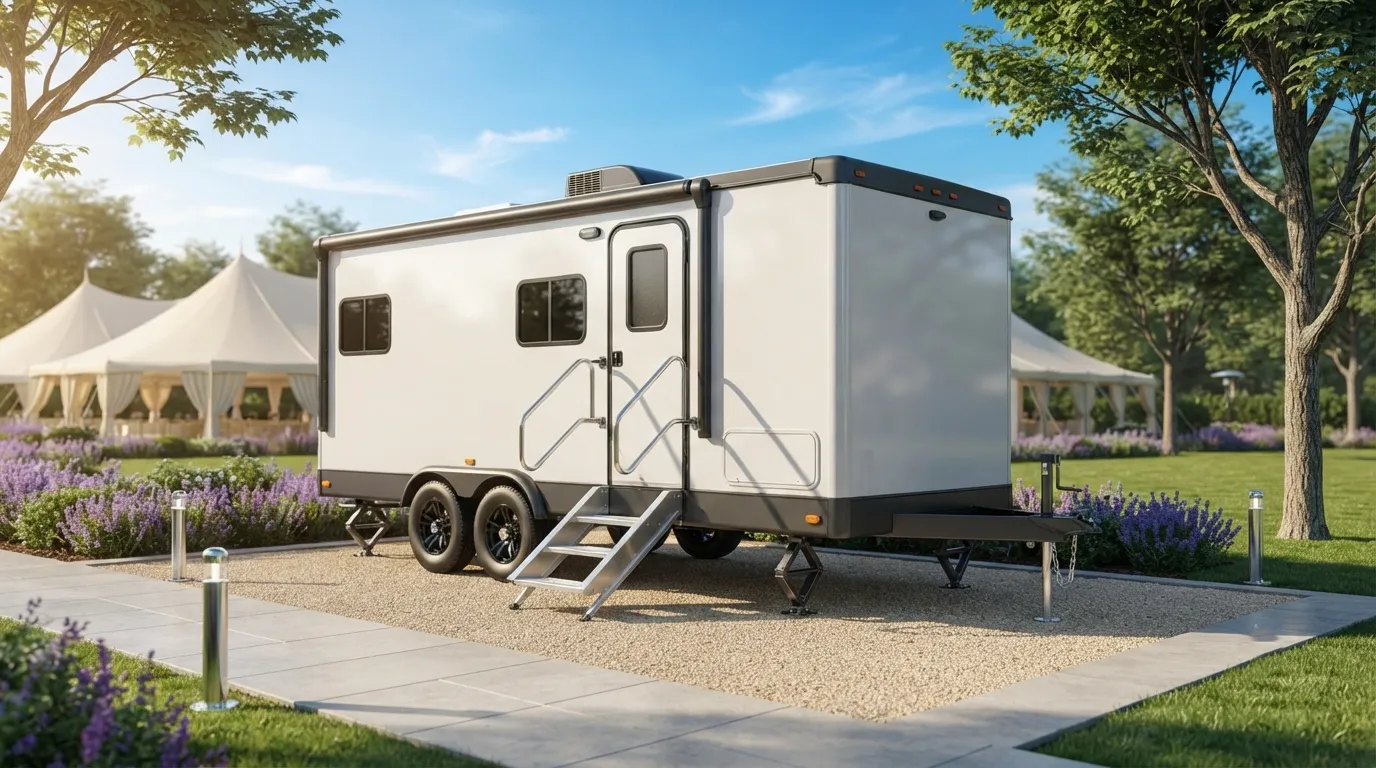
Often yes. A restroom trailer rental handles higher traffic without the line backup a bank of standard units gets at a crowded finish, and it reads better next to a sponsor tent.
What does a typical race day restroom setup cost?
Standard units run 200 to 400 dollars for an event day rate. A finish festival with multiple units, an ADA unit and a handwashing station adds up fast, so get a request a quote once the layout is set.
Do aid stations need full restroom setups?
No. Aid stations typically need one or two units each, not a full cluster. Concentrate real capacity at the start corral and the finish line where runners actually linger.
Next step
Get a delivery date
Tell us the address, the dates and the headcount. We size the order and confirm the route.